California Apostille Processing Time (2026): How Long It Takes
In 2026, a mailed California apostille typically takes several business days to a few weeks to process through the Secretary of State, depending on current volume. Walk-in service at the Sacramento or Los Angeles office is often same day. Meanwhile, private expedited couriers can complete the full authentication in 1 to 3 business days.
An apostille is a certificate the California Secretary of State attaches to your document so it is legally recognized in another country that belongs to the Hague Apostille Convention. It confirms that the notary or public official who signed your document is accredited by the State of California and their signature is listed in the Secretary of State database.
What Are the Current California Secretary of State Processing Times?
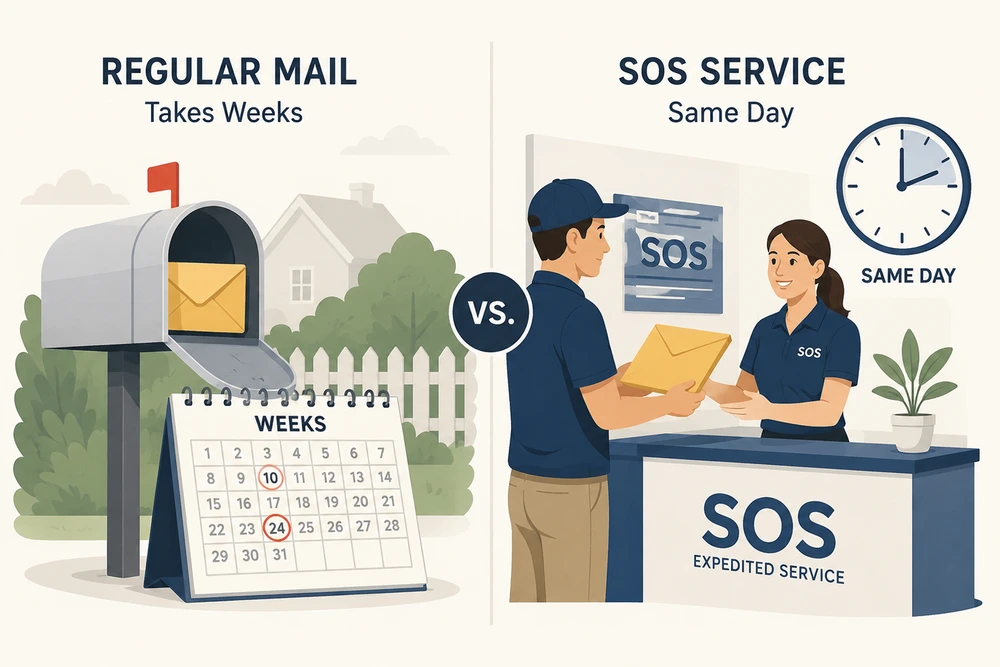
Processing times move with volume, so treat every number here as a working range rather than a promise. Always check the live estimate on the Secretary of State site before you mail anything.
Mail-in requests
Mail-in requests usually take several business days to a few weeks once the office receives your package. That window widens during busy periods and when staffing is tight, which is why the mailed route is the hardest one to predict.
Walk-in and drop-off at Sacramento
Walk-in and drop-off at Sacramento is often completed the same day. Sacramento is the main office and takes both mailed and in-person requests, so confirm the current counter hours and whether an appointment is required before you drive over.
The Los Angeles regional office
The Los Angeles regional office works in person and by appointment. It does not process every document type, so set your expectations early and confirm your document qualifies before you book.
Where to check and how to track
The Secretary of State posts current processing estimates on its official site, and that page updates as backlogs shift, so it is the only reliable source for today’s timeframe.
The state does not track a mailed request the way a courier tracks a package, so keep your own shipping tracking for both the outbound and return legs and add a buffer for the days your document waits in the queue. With Rush In Documentation Center you would not have to keep track of the apostille request since it is our responsibility to do so.
Sacramento vs Los Angeles: Which Office Is Faster?
For most people, the fastest option is whichever office you can reach in person, because walk-in beats mail almost every time.
Sacramento
Sacramento is the primary office. It carries the full mail and walk-in load and handles the widest range of document types, so it is the safe default when you are unsure where your document should go.
Los Angeles
Los Angeles is better suited to local same-day pickup. The tradeoff is that it accepts fewer document categories, so a request Sacramento would process routinely may be turned away in LA. Book ahead, and confirm your specific document type is accepted so you do not lose a trip.
Need It Faster? We Can Handle the Entire Process
If you don’t have time to visit a Secretary of State office or want to avoid mailing important documents yourself, Rush In Documentation can manage the entire California apostille process on your behalf. We verify your documents, identify the correct processing office, submit the request, and return your completed apostille using secure shipping. Expedited processing, statewide service, and international document support are available for both personal and business documents.
How Can You Get an Expedited or Same-Day Apostille?
If a deadline is close, you have three practical ways to speed things up.
- Use a courier or documentation service to handle the walk-in and return shipping for you. This is the common choice when you cannot travel to the office or are out of state, run out of time, since someone stands in line and ships the finished document back.
- Walk the document in yourself. An in-person visit to Sacramento or LA is usually the fastest route and is often finished the same day.
- Overnight shipping in both directions is the last resort when mailing is your only option. It shaves days off transit but does nothing to speed up the actual processing once your package is in the queue.
What Affects Your Processing Time?
A few things can affect how quickly your apostille gets processed, or whether it gets held up along the way.
First, your document needs to be properly notarized or state-certified before the Secretary of State can apostille it. If you send in a document that isn’t properly certified, there’s a good chance it will be returned without being processed.
Vital records, such as birth, marriage, and death certificates, require a certified copy from the county where the record was issued before they can be apostilled. Obtaining the correct certified record from the start helps prevent delays and reduces the risk of rejection.
Timing matters, too. Processing times can get longer during busy periods, especially around popular travel dates, school enrollment deadlines, and other times when demand is high.
And one of the biggest causes of delays? Simple document errors. Missing notary commission details, an expired notary commission, or incorrect certificate wording can all lead to rejection, meaning you may have to fix the issue and start the process again.
State vs Federal Documents: Where Does Yours Go?
This is the step people get wrong most often, and it can cost you weeks. Documents notarized by a California notary, or issued by California state and county agencies, go to the California Secretary of State. That covers most personal and business paperwork handled inside the state.
Federally issued documents follow a different path. An FBI background check, for example, is authenticated through the U.S. Department of State, not the California Secretary of State. Sending a federal document to Sacramento only gets it returned, so confirm the issuing authority before you choose an office.
If a deadline is tight, a local documentation service can handle the walk-in and courier steps so the document does not sit in the mail.
How Far in Advance Should You Start?
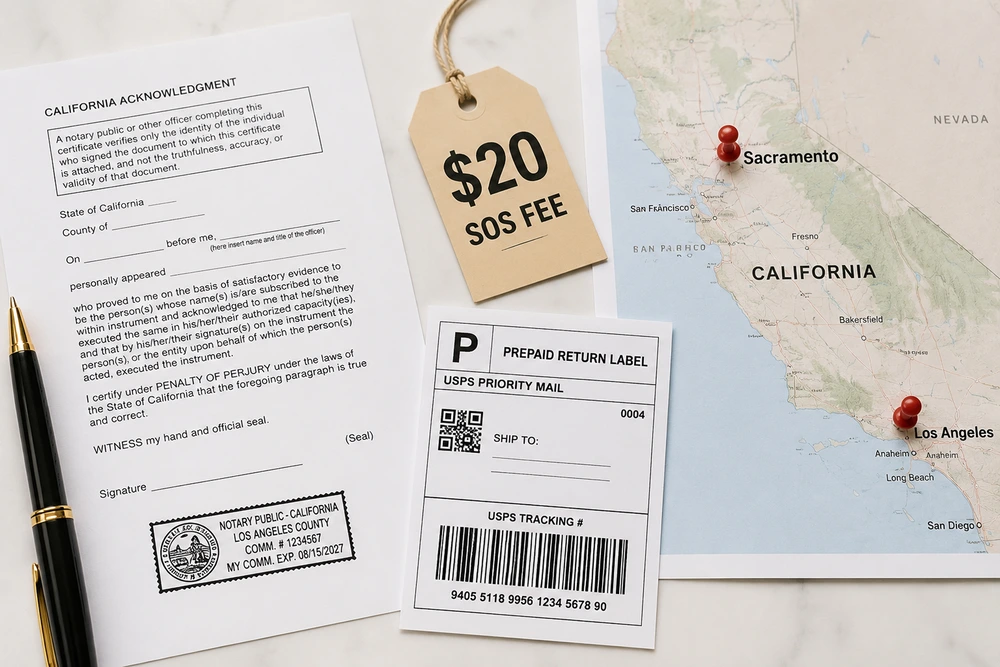
Start as early as your document allows, and count backward from the date your foreign institution needs it, not from your own travel date. A safe planning window is two to three weeks for a mailed request, and less if you can walk it in or use a courier.
Build in extra days for the steps that come before the apostille, since notarization or ordering a certified vital record takes time of its own. That early buffer is also what protects you if a rejection sends the document back to the start of the line.
What Happens If Your Apostille Request Is Rejected?
A rejection does not void your document, but it does reset the clock. The Secretary of State returns the paperwork unprocessed with a reason, you fix the issue, and you resubmit from the back of the queue. By mail that can add a week or more. In person, you can often correct and refile the same day.
Most rejections trace back to a short list of fixable errors, so it is worth reviewing the mistakes that most often delay apostille requests before you submit rather than after.
Do You Need a Separate Apostille for Each Document?
Yes. An apostille authenticates one specific document, so each document needs its own, and each carries its own Secretary of State fee. A multi-page document that is bound and notarized as a single unit usually counts as one.
Separate records are handled separately. A birth certificate and a marriage certificate, for example, are each apostilled on their own. If you are sending several at once, list them clearly so none are missed and the total fee comes out right.
What If Your Document Is Not in English?
California Notary Public can notarize document in any language since the main function of a Notary Public is to verify applicant’s identity and notarize their signature not the context of a document.
The common order is to authenticate first and translate second, though this varies by country, so confirm what your destination requires before you start. For how translation and legalization fit together, see translating and legalizing non-English documents.
What If Your Destination Is Not a Hague Convention Country?
An apostille only works for countries in the Hague Apostille Convention. If your destination is not a member, you need the consular legalization route instead, where the document is authenticated and then endorsed by that country’s consulate or embassy.
This legalization takes more steps and more time than an apostille, so start earlier if that is your path. To see how the two differ before you begin, compare an apostille with full legalization.
Frequently Asked Questions
How long does a California apostille take by mail?
By mail, a California apostille usually takes several business days to a few weeks, depending on requests volume the Secretary of State is handling at the time.
Processing times vary based on the time of year and staffing levels. Before submitting your documents, we recommend checking the California Secretary of State’s website for the latest processing times.
Can I get a same-day apostille in California?
Yes. Walk-in service at the Sacramento or Los Angeles Secretary of State office is often completed the same day. If you can’t make the trip yourself, a courier can walk it in for you.
Does the Los Angeles office process apostilles?
Yes, Los Angeles regional office processes apostilles on a walk-in basis.
Do I need to notarize my document before getting an apostille?
In most cases, yes. The Secretary of State will only apostille a document thata California notary public already notarized or that a state agency has certified. Vital records such as birth or marriage certificates need a certified copy first. Sending an uncertified document usually leads to rejection.
Do you need the original document or will a copy work?
It depends on the document. Vital records such as birth or marriage certificates need a certified copy from the issuing agency, not a plain photocopy. For notarized documents, the notarized original is what gets apostilled.
Can you track your apostille request after you mail it?
The state does not offer package-style tracking for apostille requests, so you cannot watch it move step by step. What you can do is keep tracking numbers for the outbound and return shipping, include a prepaid return label, and check the current processing estimate on the Secretary of State site for timing.