How to Renew Your Green Card Online: Complete I-90 Guide

A Green Card serves as official proof of lawful permanent resident status in the United States. When the card is nearing expiration or has already expired, it must be renewed to avoid complications with employment verification, international travel, or access to government benefits. Fortunately, most applicants can complete this process online by filing Form I-90, which is the standard application used to renew or replace a Permanent Resident Card.
When Do You Need to Renew Your Green Card?G
Generally, once in 10 years. But knowing when to renew your Green Card is just as important as knowing how to do it. While lawful permanent resident status does not automatically end when a card expires, an expired card can create serious practical difficulties.
Green Card Expiration Dates
Most Green Cards are issued with a 10-year validity period. The expiration date is clearly printed on the front of the card and applies to permanent (non-conditional) residents. Even though your immigration status does not expire with the card, the document itself must remain valid to serve as official proof of your status.
Conditional vs. Permanent Green Cards
Here we need to understand that there is a legal distinction between conditional and permanent Green Cards.
Conditional Green Cards are valid for 2 years and are commonly issued through marriage or investment-based immigration. These cards cannot be renewed using Form I-90. Instead, conditional residents must file a petition to remove conditions.
Only holders of 10-year permanent Green Cards are eligible to renew using Form I-90.
What Happens If Your Green Card Expires
If your Green Card expires, you do not lose your lawful permanent resident status. However, the expired card is no longer valid as proof of that status. This can cause issues when completing employment eligibility verification, applying for benefits, or returning to the United States after international travel.
Recommended Renewal Timeline
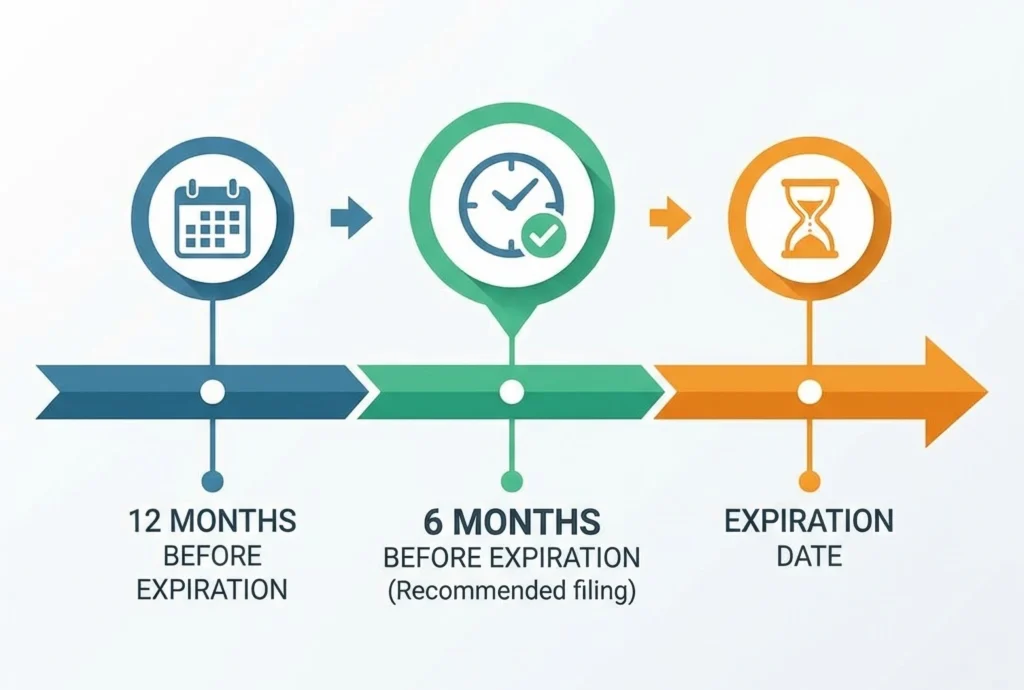
U.S. Citizenship and Immigration Services recommends submitting Form I-90 about 6 months before your Green Card expires. Applying early helps prevent documentation gaps and allows time to address any delays, requests for evidence, or biometric appointments.
Consequences of Letting Your Card Expire
There are no direct fines or penalties for allowing a Green Card to expire, but the consequences can still be significant. You may face delays or complications when traveling internationally, employers may be unable to verify your work authorization, and reentry into the U.S. can become more difficult. Renewing on time helps ensure uninterrupted proof of your lawful status and avoids avoidable administrative problems.
Form I-90 Eligibility Requirements
Before filing Form I-90, it is important to confirm that you are eligible to use this application. Form I-90 is intended for specific situations related to renewing or replacing a Permanent Resident Card, and it is not the correct form for all immigration-related updates.
Who Can Use Form I-90
Form I-90 may be used by lawful permanent residents who need to renew or replace a 10-year Green Card. You are generally eligible to file Form I-90 if your card is expired or will expire soon, if it has been lost, stolen, damaged, or destroyed, or if it contains incorrect information due to a USCIS error or a legal change such as a name update. Permanent residents who received their Green Card before turning 14 may also need to file Form I-90 after reaching that age, with limited exceptions.
Who Should Not Use Form I-90
Form I-90 should not be used by conditional permanent residents. If you hold a 2-year conditional Green Card, you must file a petition to remove conditions using Form I-751 (for marriage-based cases) or Form I-829 (for investor-based cases).
In addition, individuals applying for U.S. citizenship should file Form N-400, not Form I-90, even if their Green Card is expired or close to expiring.
Special Circumstances
Form I-90 also applies in several special situations. These include replacing a Green Card that was lost or stolen, correcting errors made by USCIS on the card, or updating personal information such as a legal name change. In these cases, supporting documentation must be submitted to explain and verify the reason for the request.
Age-Related Requirements
Children who became permanent residents before the age of 14 are generally required to file Form I-90 after turning 14 to obtain a new Green Card, unless the original card expires before their 16th birthday. This requirement applies only to permanent residents and not to individuals with conditional status.
If you are unsure whether Form I-90 is the correct application for your situation, confirming eligibility before filing can help prevent delays, rejections, or unnecessary fees.
Documents You’ll Need for Green Card Renewal
Preparing the correct documents before filing Form I-90 helps ensure a smooth and timely Green Card renewal process. While not every applicant will need the same supporting materials, most cases require a standard set of documents, with additional evidence depending on individual circumstances.
Current Green Card
You must provide clear copies of both the front and back of your current Green Card. This allows USCIS to verify your identity, card category, and expiration date. If your card has been lost or stolen, you will instead explain this in your application and may need to submit alternative evidence of your permanent resident status.
Government-Issued Photo Identification
A valid, government-issued photo ID is typically required to confirm your identity. This may include a passport, state-issued driver’s license, or other official identification document. The ID should clearly display your name, photograph, and date of birth.
Passport-Style Photos
Most applicants are required to submit two passport-style photographs. These photos must meet USCIS specifications, including
- a white or off-white background
- full-face view
- proper size.
Photos that do not meet these requirements may result in processing delays.
Supporting Documents for Special Circumstances
If you are requesting a replacement due to a name change, USCIS error, or card damage, additional documents are required. Examples include a marriage certificate, court order, or official documents showing the correct information. If your Green Card was lost or stolen, a brief explanation and any available supporting records should be included.
Payment Method for Filing Fees
Form I-90 requires payment of a filing fee and, in most cases, a biometric services fee. Payment can be made online using a credit card, debit card, or bank account withdrawal. If filing by mail, accepted payment methods include check or money order. Submitting the correct payment amount is essential to avoid rejection or delays in processing.
Having all required documents ready before filing Form I-90 reduces errors and helps ensure your Green Card renewal is processed efficiently.
Step-by-Step: How to Renew Your Green Card Online
Renewing your Green Card online is the most efficient way to file Form I-90. The process is handled through the official USCIS online system and allows you to submit documents, pay fees, and track your case electronically. Below is a clear, step-by-step overview of what to expect.
Step 1: Create a USCIS Online Account
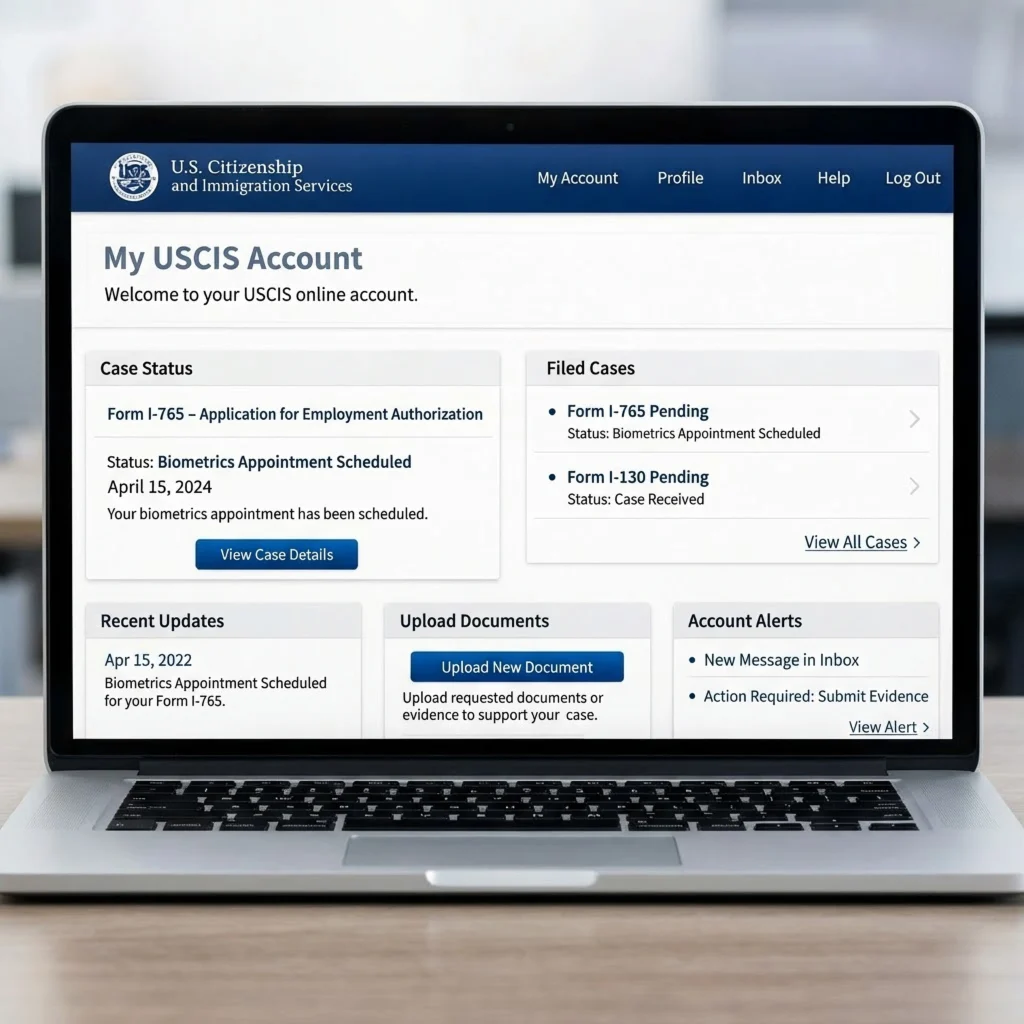
To begin, you must create an online account with U.S. Citizenship and Immigration Services. This account allows you to complete Form I-90, upload documents, receive case updates, and communicate securely with USCIS. You will need a valid email address and will be asked to create a password and verify your identity.
Step 2: Complete Form I-90 Online
Once logged in, select Form I-90 and carefully complete all required sections. You will be asked for personal information, details from your current Green Card, and the reason you are applying for renewal or replacement. It is important to review all entries for accuracy before moving forward, as errors can delay processing.
Step 3: Upload Required Documents
After completing the form, you will upload digital copies of the required documents. These typically include copies of your current Green Card (front and back) and any supporting documents related to special circumstances, such as a legal name change or a correction request. All files must be clear, legible, and in an accepted format.
Step 4: Pay the Filing Fee
Next, you will be prompted to pay the required filing and biometric services fees. Payment is made securely online using a credit card, debit card, or bank account withdrawal. USCIS will not process your application until the correct payment is received.
Step 5: Submit Your Application
After reviewing your information and confirming payment, you may submit your application electronically. Once submitted, you will receive a confirmation notice and receipt number through your online account. This receipt allows you to track your case status and serves as proof that your Green Card renewal request is officially pending.

What Happens After You Submit Form I-90?
After you submit Form I-90 online, your application enters the USCIS review process. While processing times vary, most applicants follow a similar sequence of steps after submission. Understanding what happens next can help you plan ahead and avoid unnecessary concern.
First, U.S. Citizenship and Immigration Services will issue a Form I-797 Receipt Notice. This notice confirms that your application has been received and includes a receipt number you can use to track your case online. In many cases, this receipt notice also extends the validity of your expired Green Card for a specified period, allowing you to continue working and traveling while your renewal is pending.
Next, USCIS may schedule a biometric services appointment. If required, you will receive an appointment notice with the date, time, and location of your fingerprinting and photo capture. Attending this appointment is mandatory, and missing it without rescheduling can delay or negatively affect your application.
During processing, USCIS will review your application and supporting documents. If additional information is needed, they may issue a Request for Evidence (RFE). Responding accurately and within the stated deadline is critical to keep your case moving forward.
Once the review is complete, USCIS will make a decision on your application. If approved, your new Green Card will be produced and mailed to the address on file. You can monitor each stage of the process through your online USCIS account until your renewed card is delivered.
Green Card Renewal Fees and Costs
When renewing your Green Card using Form I-90, it is important to understand the associated filing fees and how they apply to your situation. Submitting the correct payment helps prevent delays or rejection of your application.
Filing Fee
Form I-90 requires a filing fee, which is the base cost for processing your application. This fee must be paid at the time you submit the form, whether you file online or by mail.
Biometric Services Fee
In most cases, USCIS also requires a biometric services fee. This covers the cost of taking your fingerprints, photograph, and signature at a designated enrollment services provider. Attending your biometric appointment is required unless USCIS has specifically waived the fee for your case.
When Fees May Be Waived
In limited circumstances, USCIS may waive the filing or biometric fee. Fee waivers are typically considered only for applicants who can demonstrate financial hardship. To request a waiver, you must submit evidence that you meet the eligibility criteria set by USCIS.
Accepted Payment Methods
If you file your Form I-90 online, you can pay the required fees securely using a credit card, debit card, or direct withdrawal from a U.S. bank account. If you file by mail, USCIS generally accepts check or money order payable to the U.S. Department of Homeland Security. Always follow the payment instructions provided in the official filing guidance to ensure your fees are accepted.
How Long Does Green Card Renewal Take?
Green Card renewal processing times vary depending on workload and individual circumstances. In most cases, Form I-90 applications take several months to process from the date of submission. Factors such as biometric appointments, requests for additional evidence, or high application volumes can extend the timeline.
After filing, you will receive a receipt notice confirming that your application is pending. This notice is important because it may extend the validity of your expired Green Card for a limited period while USCIS completes processing. You can monitor your case status online using the receipt number provided.
Can You Travel While Your Green Card Renewal Is Pending?
Yes, you may generally travel internationally while your Green Card renewal is pending, but caution is required. If your physical Green Card has expired, you should carry your receipt notice showing that Form I-90 has been filed, as it may serve as temporary proof of status.
In some situations, additional documentation may be required to reenter the United States. If you have urgent travel plans or concerns about reentry, it is advisable to confirm your travel eligibility with U.S. Citizenship and Immigration Services before departing.
Renewing by Mail vs. Online: Which Is Better?
Filing Form I-90 online is generally faster and more convenient than filing by mail. Online filing allows you to upload documents electronically, receive instant confirmation, track your case in real time, and communicate securely with USCIS.
Renewing by mail remains an option, but it involves longer processing times, manual document handling, and the risk of delays due to missing information or payment errors. For most applicants, online filing is the preferred and more efficient method.
What If Your Application Is Denied?
If your Form I-90 application is denied, USCIS will send a written notice explaining the reason for the decision. Common reasons include filing the incorrect form, lack of eligibility, or failure to provide required documentation.
A denial does not automatically affect your lawful permanent resident status, but it does require prompt attention. Depending on the reason, you may be able to reapply, submit missing information, or pursue other appropriate immigration options. Reviewing the denial notice carefully and addressing the issue accurately is essential to resolving the matter.
Frequently Asked Questions
Can I renew my Green Card if it is already expired?
Yes. You may file Form I-90 even if your Green Card has already expired. While your lawful permanent resident status does not expire with the card, renewing as soon as possible is important to avoid issues with employment verification, travel, or identification.
What if I lost my Green Card?
If your Green Card was lost or stolen, you should file Form I-90 to request a replacement. You will need to explain the circumstances and may be asked to provide additional identification or supporting documentation.
Do I need a lawyer to renew my Green Card?
Most Green Card renewals do not require an attorney. If your case is straightforward, you can complete Form I-90 on your own. Legal assistance may be helpful if your situation involves complications or unusual circumstances.
Can I renew my Green Card from outside the United States?
In general, Form I-90 is intended for applicants who are physically present in the United States. If you are outside the U.S. and your Green Card has expired or been lost, you may need to contact a U.S. consulate or USCIS for guidance before filing.
What if my name changed since I received my Green Card?
If your legal name has changed due to marriage, divorce, or a court order, you can update it when filing Form I-90. You must submit official documentation showing the legal name change.
Is there a grace period after a Green Card expires?
There is no formal grace period. Although your immigration status remains valid, an expired Green Card can cause practical problems. USCIS recommends renewing about six months before the expiration date.
How long does the renewal process usually take?
Processing times vary, but most Form I-90 applications take several months. You can track your case status online using your receipt number.
Will renewing my Green Card affect my citizenship application?
No. Renewing your Green Card does not negatively affect a future naturalization application. In fact, having a valid card is often helpful when applying for U.S. citizenship.
Start Your Green Card Renewal With Confidence
Renewing your Green Card online through Form I-90 is a straightforward process when you understand the requirements and prepare in advance. The keymainsteps include confirming your eligibility, gathering the correct documents, creating a USCIS online account, completing Form I-90 accurately, and tracking your case after submission.
Starting the renewal process early, ideally six months before your card expires, helps you avoid unnecessary delays, travel restrictions, or employment verification issues. Careful preparation and timely filing are the best ways to ensure a smooth renewal experience.
If you want a professional help during your renewal path, Rush in Documentation is your best choice.