How Long Does a Live Scan Take in Los Angeles?
After your live scan fingerprinting appointment, your prints are submitted electronically and begin moving through California and (sometimes) federal systems. How fast you get “cleared” depends on which agencies are required (DOJ only vs. DOJ + FBI) and how quickly the requesting organization reviews and posts your results.
In most California cases, DOJ processing is commonly a few business days, and many programs describe a typical window of about 3-7 days once DOJ/FBI receives the submission.
What You Need to Know About Live Scan Timing
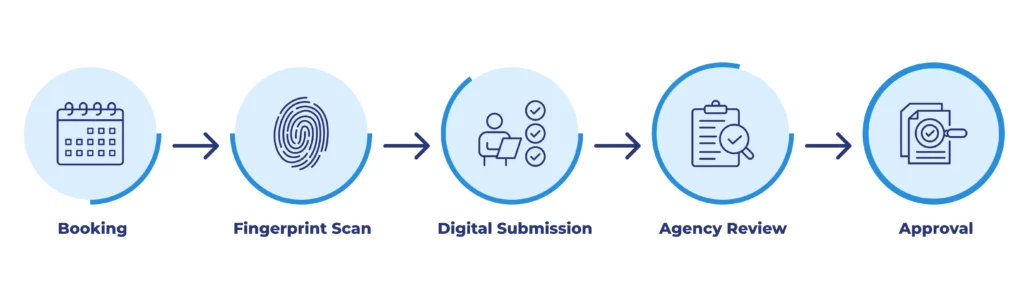
Before diving into the details, here’s what the entire Live Scan process typically looks like from start to finish:
| Stage | Timeframe | Details |
| Book Appointment | 1 minute to 1 day | Online or phone booking |
| Fingerprinting Appointment | 10 to 15 minutes | Actual time fingerprinted |
| Digital Submission to DOJ/FBI | Instant | Automatic after appointment |
| DOJ Processing | 1 to 7 business days | California Department of Justice review |
| FBI Processing | 24 to 72 hours | Federal Bureau of Investigation review |
| Results to Agency | Hours to weeks | Depends on requesting organization |
| Total Timeline | 3 to 14 days | Best case to worst case |
Most applicants fall somewhere in the middle of this range, receiving their results within 7 to 10 business days.
How Long Does a Live Scan Appointment Actually Take?
A Live Scan appointment is usually one of the fastest parts of the entire background check process. In most cases, the fingerprinting itself takes only a few minutes, and your total time at the center depends mostly on wait time and how prepared you are.
The Fingerprinting Process Usually Takes 5-10 Minutes
Once you’re called from the waiting area, the actual scanning is quick. A technician will have you place your fingers on a digital scanner that captures prints electronically and checks their quality in real time. If a finger doesn’t scan clearly, they’ll retake it immediately. Most people complete the scan in about 5-10 minutes.
This real-time feedback is a big reason Live Scan is faster than old ink methods: you typically won’t leave with “missing” prints that later get rejected.
Total Visit Time Depends on Wait Times
Even though the scan is fast, your full visit can be longer depending on demand at that location.
In Los Angeles, the typical total visit time often falls into these ranges:
- 15-20 minutes during slower periods (check-in + short wait + scan)
- 20-30 minutes during normal busy periods
- 30-45+ minutes during peak rush times at popular locations
Peak vs Off-Peak Times in Los Angeles
If you want the shortest visit, timing matters.
Busiest times tend to be:
- Monday and Tuesday mornings
- Lunch hours (around 12-1 PM)
- After work (around 4-6 PM)
- End/beginning of hiring cycles, holidays, and back-to-school season
Typically quieter times:
- Mid-week (Wednesday-Friday)
- Mid-morning (around 10-11:30 AM)
- Mid-afternoon (around 2–3 PM)
- Right when a center opens
If you can book during off-peak hours, you can often cut your total visit time down to 10–15 minutes instead of waiting 30+ minutes.
How Quickly Do Live Scan Results Actually Arrive After Your Appointment?
Once your fingerprinting appointment is complete, your fingerprints are submitted electronically and begin moving through one or more government agencies. How fast you receive results depends on which agencies are required (California DOJ only or DOJ plus FBI) and how busy the system is at that time. In many cases, government processing is pretty quick; the longest delays often occur after results reach the requesting organization.
California Department of Justice Processing Timeline Explained
The California Department of Justice (DOJ) maintains the state’s criminal history database and processes most Live Scan fingerprints submitted in California. This is the required step for nearly all Live Scan background checks.
For most applicants, DOJ results are returned within 3 to 7 business days after the Live Scan center submits fingerprints electronically. If you have no criminal record and your fingerprints are clear, results often arrive sooner, sometimes in 2 to 3 business days.
In ideal situations, processing can be even faster. When fingerprints are high quality, personal information matches state records perfectly, and no manual review is required, some applicants receive clearance in 24 to 48 hours. This tends to happen when there is no criminal history and no data discrepancies.
However, processing can take longer during high-volume periods. At the start of the school year, during major hiring seasons, and around holidays, the DOJ frequently experiences backlogs. During these times, even routine background checks may take 10 to 14 business days.
Delays usually occur because the DOJ does not issue instant approvals. Every submission is checked against California’s complete criminal database. If your name is familiar, multiple potential matches may appear and require manual review. If fingerprints are unclear, DOJ staff must verify them manually. These steps ensure accuracy, but they add time.
Federal Bureau of Investigation Processing Tends to Be Much Faster
Many roles, especially those involving children, seniors, vulnerable populations, healthcare, or law enforcement, require an FBI background check in addition to the California DOJ check.
In most cases, FBI results are returned within 24 to 72 hours of submission. Some high-priority requests are completed in as little as 24 hours, while others take closer to three days. FBI processing is generally faster because the system is highly automated. Digital fingerprints are rapidly searched against federal databases, and when no matches are found, clearance is generated automatically. Only cases with potential matches require examiner review.
Because of this automation, FBI processing is usually quicker than DOJ processing.
Why Final Result Timing Depends on the Requesting Organization
Even after the California DOJ and FBI processing is complete, results are not delivered directly to you. They are sent to the organization that requested the Live Scan, such as an employer, licensing board, school, or government agency. That organization must then review the results internally before notifying you of clearance or next steps.
This internal review stage often adds several additional business days and is one of the most common reasons Live Scan results appear delayed.
In-Home Supportive Services (IHSS)
For IHSS applicants, DOJ processing typically takes 3 to 7 business days. Once results are received, the IHSS agency conducts its own review, which usually takes 1 to 3 additional business days.
Teaching Credentials and Education Roles
Education-related background checks involve multiple layers. DOJ processing usually takes 3 to 7 business days, while FBI processing takes 1 to 3 business days. After that, the California Commission on Teacher Credentialing or the school district performs a credential review, adding another 2 to 5 business days.
Healthcare and Caregiver Positions
Healthcare and caregiving roles follow a similar pattern. DOJ results typically arrive within 3 to 7 business days, and FBI results within 1 to 3 business days. Facility credentialing and compliance review can add 1 to 5 additional business days.
Volunteer Positions
Volunteer background checks often take longer due to limited administrative resources. DOJ and FBI processing generally takes 3 to 7 and 1 to 3 business days, but organizational review may take up to 7 additional business days.
Firearm Permits
Firearm permit background checks involve the most extensive review. DOJ and FBI processing typically takes 3 to 7 and 1 to 3 business days, followed by a sheriff’s office review that can take 5 to 10 business days.
Complete Live Scan Timeline Breakdown From Booking to Final Results
If you’re waiting on Live Scan results, the biggest question is usually “how long does the whole process actually take?” The answer depends on more than just your fingerprinting appointment. While the scan itself takes only minutes, your fingerprints move through multiple agencies and review stages before you receive final clearance.
From scheduling your appointment to DOJ and FBI processing and finally the requesting organization’s review, each step adds time. Below is a clear, step-by-step breakdown of the entire Live Scan process, including realistic timeframes for each stage so you know exactly what to expect.
Stage 1: Booking Your Appointment
Most Live Scan centers offer online booking with same-day or next-day availability. Booking online usually takes just a few minutes. Phone scheduling may take longer and limit availability. Booking early helps avoid unnecessary delays.
Stage 2: Fingerprinting Appointment
The appointment itself is fast. Fingerprint scanning typically takes 5–10 minutes, with total time at the center averaging 15-30 minutes, depending on wait times and location demand. After this step, your role in the process is complete, everything else happens digitally.
Stage 3: Digital Submission
Once fingerprints are captured and verified, they are submitted electronically to the California DOJ and, if required, the FBI within minutes. No action is needed from you at this stage.
Stage 4: DOJ Processing
The DOJ searches fingerprints against California’s criminal database.
- Clear records are often processed in 24-48 hours
- Standard cases take 3-5 business days
- Manual review or high-volume periods can extend processing to 7-14 business days.
Stage 5: FBI Processing (If Required)
FBI checks are usually faster due to automation. Most applicants receive results within 1-3 business days, and results are sent directly to the requesting organization.
Stage 6: Requesting Organization Review
The final step is the organization’s internal review. This often adds several days and is the most common source of delays. Employers, agencies, or licensing bodies review results and then notify you.
What Factors Actually Cause Live Scan Delays in Los Angeles?
Live Scan delays are usually not random. Most slowdowns happen for a few predictable reasons tied to volume, fingerprint quality, data accuracy, and organizational review. Understanding these factors helps you plan better and avoid unnecessary delays.
High-Volume Periods Create Predictable Delays
Seasonal demand is the most significant driver of longer Live Scan timelines. During peak hiring periods, agencies process thousands of submissions daily, which slows everything down.
Common high-volume periods include back-to-school hiring in August and September, spring hiring for teachers and credentialed staff, January hiring surges, and November–December seasonal onboarding. The beginning and middle of each month also tend to be busier as employers start new hiring cycles.
During these times, DOJ and FBI processing may take the whole processing window rather than the faster turnaround seen in slower months. Scheduling during off-peak times, mid-week, and mid-afternoon can reduce total processing time by several days.
Poor Fingerprint Quality Often Requires Retakes
Fingerprint quality is one of the most common and preventable causes of delay. Dry or cracked skin, excessive moisture, worn fingerprints from manual labor, scars, or skin conditions can all reduce scan clarity.
If fingerprints don’t meet quality standards, technicians may need to rescan them. While most issues are resolved on the spot, persistent quality problems can require a second appointment, adding several days to the process.
Preparing your hands properly, moisturizing the night before, cleaning hands just before the appointment, and avoiding rushing the scan significantly improve results.
Organizational Backlogs Cause the Longest Delays
Even after the DOJ and FBI processing is complete, the requesting organization must review the results internally. This step often takes longer than government processing.
Delays occur when organizations receive high application volumes, have limited HR staff, require multiple approval steps, or batch-process results rather than review them individually. Missing or incomplete application information can also pause review entirely.
Ensuring your application is complete and accurate helps prevent unnecessary delays at this stage.
Information Mismatches Trigger Manual Review
Any mismatch between the information entered for Live Scan and the organization’s records can trigger a manual review of your submission.
Common issues include name variations, maiden names, typos in dates of birth, incorrect addresses, or errors in identification numbers. These mismatches may prevent automated record matching and require human verification, which can add a week or more to processing.
Always match your Live Scan information exactly to what the requesting organization has on file.
Manual DOJ Review Adds Processing Time
Certain situations automatically trigger manual DOJ review, including familiar names, prior name changes, previous arrests (even if resolved), multi-state records, or borderline fingerprint quality.
While these reviews ensure accuracy, they take longer than automated processing. If any of these apply to you, it’s wise to build extra buffer time into your schedule.
Required Resubmission Restarts the Timeline
In rare cases, Live Scan submissions are rejected due to technical issues, severe fingerprint quality problems, or incorrect identification. When this happens, a new appointment is required, restarting the entire process and adding 7 to 14 business days.
You can reduce the risk of resubmission by confirming all information before submission and asking the technician to verify successful transmission before leaving the center.
How to Speed Up Your Live Scan Results Through Preparation and Strategy
While you can’t control every part of Live Scan processing, good preparation can shave days off your timeline. Most delays stem from avoidable issues such as information errors, poor fingerprint quality, or bad timing. Here’s how to give yourself the best chance at fast results.
Verify All Information Before Your Appointment
Before you book, confirm the exact details the requesting organization has on file. Your name, middle name, date of birth, and ID details must match exactly. Even minor discrepancies can trigger manual review.
Ask the organization for the ORI code if one is required. This code ensures your results are routed to the correct agency. Providing it at your appointment helps prevent misdirected submissions and unnecessary delays.
Prepare Your Hands for Clear Fingerprint Scans
Fingerprint quality directly affects processing speed. Poor scans often lead to retakes or even resubmission.
The night before your appointment, wash your hands, dry them thoroughly, and apply hand lotion if your skin is dry. On the day of your appointment, clean your hands again, moisturize lightly if needed, and make sure your fingers are clean and dry before scanning. Relax your hands during the scan; pressing too hard or too lightly can reduce clarity.
Clear, high-quality scans move through DOJ and FBI systems faster.
Schedule Your Appointment at Less Busy Times
Timing matters more than most people realize. Early mornings when centers first open and mid-week appointments (Tuesday through Thursday) usually have shorter wait times. Mid-afternoon slots are often quieter than lunch hours or after-work periods.
Avoid peak seasons when possible, especially August, December, January, and primary hiring cycles. Choosing an off-peak time can reduce both your wait at the center and overall processing delays.
Choose a Certified, High-Volume Live Scan Center
Not all Live Scan providers operate at the same efficiency level. High-volume centers tend to have experienced technicians, newer scanners, and smoother workflows, which improve scan quality and reduce errors.
Look for established centers with strong reviews mentioning speed, efficiency, and professionalism. Centers with multiple scanning stations usually move faster than smaller locations.
Double-Check Information Before You Leave
At your appointment, pay close attention as your information is entered. Confirm your name, date of birth, ID number, address, and ORI code (if applicable). Many centers allow you to review details on screen before submission; take a moment to do so. Catching a typo before submission can save you a week or more later.
Ask About Expedited Processing Options
In some cases, expedited processing is available for an additional fee. Specific roles, such as healthcare, education, or government positions, may qualify for priority handling.
Expedited options aren’t always offered, but when they are, they can reduce DOJ processing from several days to one or two, and FBI results may return within 24 hours. It’s always worth asking both the Live Scan center and the requesting organization.
How Live Scan Processing Works in California
Although the appointment itself is brief, multiple secure systems and review layers are involved after you leave the center.
Digital Fingerprinting Replaces Traditional Ink
Live Scan uses high-resolution digital scanners, not ink cards. When you place your fingers on the device, the system captures detailed ridge patterns and verifies image quality instantly. If a scan isn’t clear enough, it’s retaken on the spot.
This real-time quality check prevents incomplete or unreadable fingerprints from entering the system, reducing the risk of later rejection and delays.
Secure Digital Transmission to DOJ and FBI
Once your fingerprints are approved, they’re encrypted and transmitted electronically within minutes through secure government networks. They are sent to the California Department of Justice and, when required, to the FBI simultaneously.
No manual handling or mailing is involved, and no action is required from you after the appointment.
DOJ Searches the California Criminal Database
The California DOJ compares your fingerprints against the state’s full criminal history database.
If no matches are found, clearance is generated automatically. If potential matches appear, trained examiners manually review them to confirm identity and accuracy.
Typical DOJ timelines:
- 24-48 hours for clear, automated cases
- 3-5 business days for routine processing
- 5-14 business days during manual review or high-volume periods
FBI Conducts a Faster Federal Check (If Required)
When an FBI background check is required, fingerprints are searched against the federal database. This process is usually faster because it’s highly automated. Most FBI results are completed within 1-3 business days, with only a small percentage requiring examiner review.
Results Are Sent to the Requesting Organization
After DOJ and FBI processing, results are sent directly to the organization that requested the Live Scan, not to you. The organization reviews the results internally and then notifies you of clearance or next steps.
Applicants may also see results marked as “completed” even though they haven’t been notified yet. In those cases, DOJ status tools may show that results were sent while the organization is still reviewing them:
Who Actually Receives Your Live Scan Results?
In most cases, you do not receive results directly from the DOJ or the FBI. Results go to the requesting organization, which then notifies you.
You may receive a copy only if:
- You requested the Live Scan for personal use
- The organization chooses to share the report
- You specifically requested a copy through the organization
If you haven’t heard anything after 2-3 weeks, contact the organization’s HR or compliance department directly rather than waiting passively.
Frequently Asked Questions About How Long Live Scan Takes
How much time should I plan for a Live Scan appointment?
Plan for about 30 minutes total at the Live Scan center. The fingerprinting itself usually takes 10–15 minutes, but waiting time can extend the visit to 20-30 minutes, especially during busy periods. Early morning or off-peak appointments may take as little as 15-20 minutes.
How many days does it typically take to get Live Scan results?
Most applicants receive final Live Scan results within 5 to 14 business days. California DOJ processing typically takes 3-7 business days, FBI processing (if required) takes 1-3 business days, and the requesting organization’s review adds 1–5 business days. The most common total timeline is 7-10 business days.
Can Live Scan results take longer than two weeks?
Yes. While many results are completed within two weeks, some cases take up to three weeks. This usually happens during high-volume periods, when fingerprints require retakes, when information mismatches trigger manual review, or when the requesting organization has internal processing delays.
What usually causes Live Scan delays?
Organizational backlogs, high DOJ or FBI processing volume, poor fingerprint quality, or incorrect personal information are the primary causes of delays. In many cases, the delay occurs after results reach the requesting organization, not during fingerprint submission.
Is it possible to get same-day Live Scan results?
Same-day results are rare. In limited cases, FBI results may return within 24 hours if fingerprints are clear and no manual review is required. However, you should plan for at least 3–5 business days for preliminary processing.
Do I need both a DOJ and an FBI background check?
It depends on the position or application. Many jobs and licenses require both DOJ and FBI checks, while others require only one. The organization requesting your Live Scan will specify exactly which agencies are required.
Can having a common name slow down Live Scan processing?
Yes. Applicants with common names may be subject to manual review, which can add 2–3 business days. Ensuring your name and personal information exactly match your ID and application helps reduce this risk.
Will I be notified when my Live Scan results are ready?
Not automatically. Results are usually sent to the requesting organization, not directly to you. That organization will notify you by email, phone, or letter. If you haven’t heard anything after 2–3 weeks, contact their HR or compliance department directly.
Getting Your Live Scan Done Quickly in Los Angeles
Getting results faster starts with planning and using a reliable Live Scan provider. A certified, high-volume center with experienced technicians and fast digital submission can significantly reduce delays.
If your Live Scan is part of an immigration, apostille, or document authentication process, working with a coordinated service provider can help prevent downstream issues. Rush-In Documentation assists clients with Live Scan coordination alongside notarization and document authentication, helping ensure everything is submitted correctly the first time.
For most positions, final Live Scan results are received within 7-10 business days. With proper preparation and the right support, you can move through the process efficiently and avoid unnecessary delays.